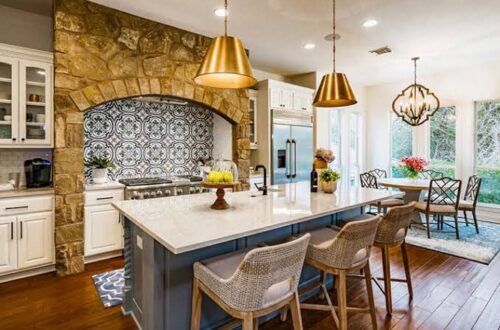
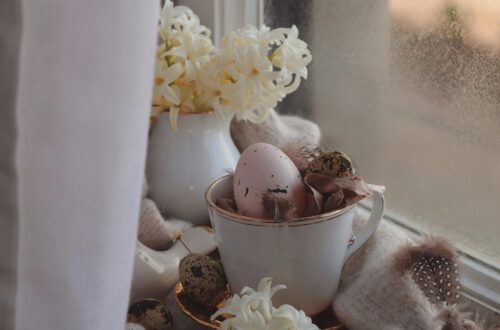
There is a particular kind of beauty found along the Mediterranean—one that feels both ancient and effortless. It is not polished in the modern sense, nor is it overly styled. Instead, it is layered by time, shaped by climate, and softened by light.
To design a Mediterranean-inspired summer room is not to replicate a place, but to interpret a philosophy: simplicity enriched by texture, light as a central feature, and materials that feel inherently connected to the earth.
This approach aligns seamlessly with elevated coastal design, offering a more grounded, architectural expression of summer living.

The Foundation: Architecture as Atmosphere
Mediterranean interiors begin not with décor, but with structure.
In regions like Santorini and the Amalfi Coast, architecture is designed to respond to heat and light. Thick walls keep interiors cool. Arched openings soften transitions between spaces. Windows are often deep-set, allowing light to enter gradually rather than harshly.
To translate this into your own home, focus on suggesting architectural depth, even if you are working within a standard space:
- Use limewash or plaster finishes to create dimension on flat walls
- Incorporate arched mirrors or doorways where possible
- Add visual weight through materials rather than ornament
The goal is to create a room that feels grounded—as though it belongs to the landscape.
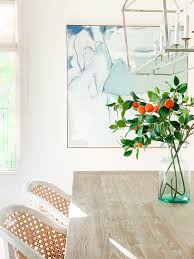
A Palette Drawn from Earth and Sun
Mediterranean color palettes are not invented—they are observed.
They come from sunlit stone, clay earth, faded textiles, and the muted greens of olive trees. Unlike trend-driven palettes, these tones feel timeless because they are rooted in nature.
Key tones to consider:
- Warm whites and soft creams
- Terracotta, clay, and rust
- Muted olive and sage greens
- Stone grays and sun-washed taupes
Rather than sharp contrast, aim for tonal layering—colors that gently shift and blend, much like a landscape at dusk.
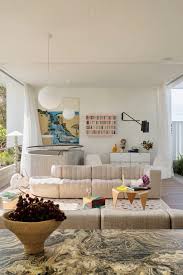
The Power of Natural Materials
Materiality is where Mediterranean design truly comes alive.
These interiors are defined by what they are made of, not what is placed within them. Surfaces are rarely perfect, and that imperfection is precisely what gives them character.
Focus on:
- Terracotta and ceramics: functional, sculptural, and inherently warm
- Linen textiles: breathable, slightly wrinkled, and relaxed
- Raw wood: often aged or minimally treated
- Woven elements: baskets, rugs, and simple fiber accents
Each material should feel honest and tactile, contributing to a layered yet restrained environment.
Light as a Living Element
If there is a single defining feature of Mediterranean interiors, it is light.
Not artificial, controlled light—but natural light that shifts, softens, and transforms a space throughout the day.
Design with this in mind:
- Allow windows to remain unobstructed or lightly filtered
- Use surfaces that reflect light softly rather than glare
- Pay attention to how light interacts with texture—plaster walls, linen, and wood all respond differently
A well-designed Mediterranean room is never static. It evolves from morning brightness to the golden warmth of evening.
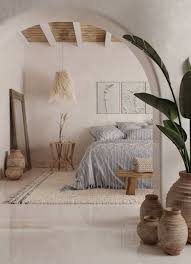
Furnishing with Restraint
One of the most common mistakes in Mediterranean-inspired design is over-furnishing.
True to its origins, the style is pared back and intentional. Furniture is chosen for function and form, not excess.
Guidelines to follow:
- Opt for fewer, well-chosen pieces rather than filling the room
- Keep silhouettes simple and grounded
- Let materials carry visual interest instead of decorative embellishment
This restraint allows the room to breathe—and ensures that every element has purpose.
Indoor–Outdoor Continuity
Mediterranean living blurs the line between inside and out.
Doors remain open, air circulates freely, and spaces extend beyond their walls. Even in homes without direct outdoor access, this principle can be interpreted through design.
Consider:
- Repeating materials (stone, wood, textiles) across spaces
- Positioning furniture to face windows or natural views
- Incorporating elements that suggest nature—without overwhelming the space
The aim is continuity, not separation.
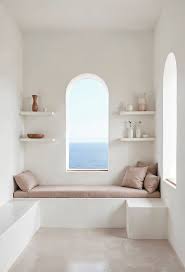
A Room That Feels Like Summer
Ultimately, a Mediterranean-inspired room is not defined by any single element. It is the result of balance—between light and shadow, simplicity and texture, structure and softness.
It is a space that does not demand attention, but quietly holds it.
In a season that often leans toward excess, this approach offers something rarer: calm, grounded beauty shaped by nature and time.
Thanks for reading.