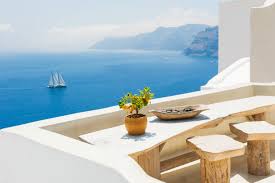
The Mediterranean kitchen is not simply a place to cook—it is a space shaped by ritual, season, and the quiet rhythm of daily life. In summer, it becomes something more: open, sunlit, and deeply connected to the outdoors.
Unlike modern kitchens that often prioritize sleekness and concealment, Mediterranean kitchens embrace material honesty, visible function, and lived-in beauty. They are designed to be used, not staged—where preparation, gathering, and conversation unfold seamlessly.
Let’s dive into some fundamentals of designing a kitchen with a Mediterranean flair.
A Foundation of Stone, Plaster, and Time
At the heart of a Mediterranean kitchen is its structure.
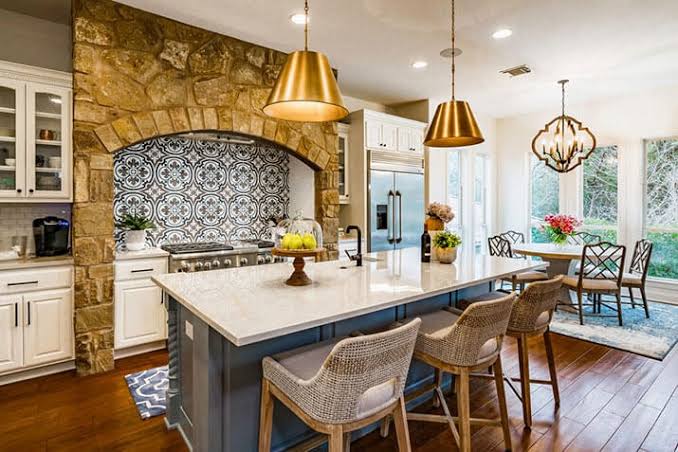
In regions along the Amalfi Coast or the hills of Andalusia, kitchens are often built from stone and finished in plaster, creating surfaces that feel cool to the touch and softly reflective in the light.
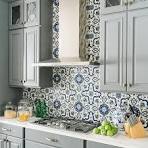
To bring this into a modern home, you should consider the following: plaster or limewash finishes instead of flat paint. Introduce stone elements to the design—a backsplash, countertop, or even decorative accents. And, embrace imperfection such as uneven surfaces and patina add depth and authenticity
These foundational elements set the tone before a single decorative object is introduced.
Open Shelving and the Beauty of Utility
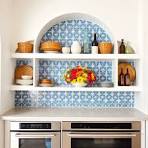
One of the most distinctive features of Mediterranean kitchens is the absence of concealment.
Rather than hiding everyday items behind cabinetry, these spaces celebrate utility as design. Stakes of ceramic plates, hand-thrown bowls, glass filled jars with grains or herbs, and linen towels drape within reach, all set the stage of a Mediterranean kitchen.
This creates a kitchen that feels active and personal. Nothing is overly curated, yet everything contributes to the visual rhythm of the space.
The key is cohesion—keeping materials and tones consistent so the openness feels intentional rather than cluttered.
A Palette Rooted in Warmth
Mediterranean kitchens are defined by warmth—not brightness.
Instead of stark whites or high-contrast finishes, the palette leans into tones shaped by sun and earth such as soft creams and warm whites, terracotta and clay, muted green inspired by olives, and natural wood in honeyed or weathered finishes.
These colors work together to create a space that feels grounded and inviting, particularly in the long light of summer afternoons.
The Role of Wood and Handcrafted Detail
Wood introduces warmth and balance to the stone and plaster foundation.
In Mediterranean kitchens, it often appears in exposed ceiling beams, simple, sturdy tables, cutting boards and utensils left in view, and cabinetry with minimal finish.
What matters most is that the wood feels authentic and tactile—never overly polished or manufactured. Think inspired by nature.
Handcrafted elements further reinforce this sensibility. A slightly irregular bowl or a worn tabletop tells a story that mass-produced perfection cannot.
Light, Air, and the Rhythm of Summer
In summer, the Mediterranean kitchen is rarely closed off.
Windows are open. Curtains move gently with the breeze. Light shifts across surfaces, animating the room from morning through evening.
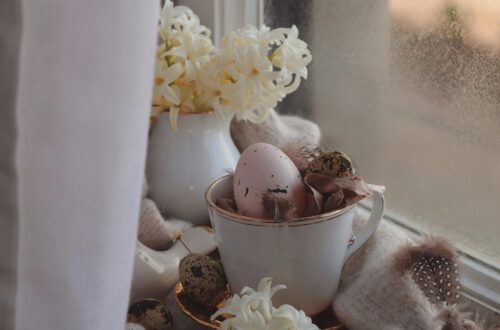
To recreate this feeling, keep the window treatments light and minimal, place herbs or simple greenery along windowsills, and allow natural light to define the space rather than relying on headlights on artificial sources.
A kitchen designed this way feels less like a contained room and more like an extension of the outdoors.
The Table as the Center of Life
If there is a focal point in a Mediterranean kitchen, it is not the island or the appliances—it is the table.
Often simple and unadorned, the table becomes the place where everything converges, food prep that shared, lingering conversations, and time seems to slow down.
Styling is minimal — linen runner or cloth down the middle, a bowl of fruit, a loaf of bread, olive oil, and perhaps a few herbs here and there.
It is not about presentation—it is about presence.
Function as Beauty
Perhaps the most enduring lesson of the Mediterranean kitchen is that function itself can be beautiful.
When materials are honest, objects are purposeful, and the space is allowed to evolve naturally, design becomes less about decoration and more about living well within it.
This is especially resonant in summer, when life naturally shifts toward simplicity—fresh ingredients, open spaces, and unhurried moments.
Thanks for reading….
for more, click here.