February is often reduced to a commercialized version of romance—roses, chocolates, and fleeting sentiment. But historically and aesthetically, February belongs to something deeper. It belongs to Romanticism.
Not romance in the superficial sense, but the 19th-century movement that elevated emotion, nature, longing, solitude, imagination, and the sublime. In art, literature, and design, Romanticism is not soft—it is expansive. It grapples with awe, melancholy, spiritual intensity, and the human need for transcendence.
As winter lingers and daylight subtly stretches, February remains the most Romantic month of the year.
Here are seven reasons why.
1. February Is the Season of the Sublime Landscape
Romantic painters sought the sublime—the overwhelming power of nature that makes the viewer feel small, reflective, even spiritually shaken.
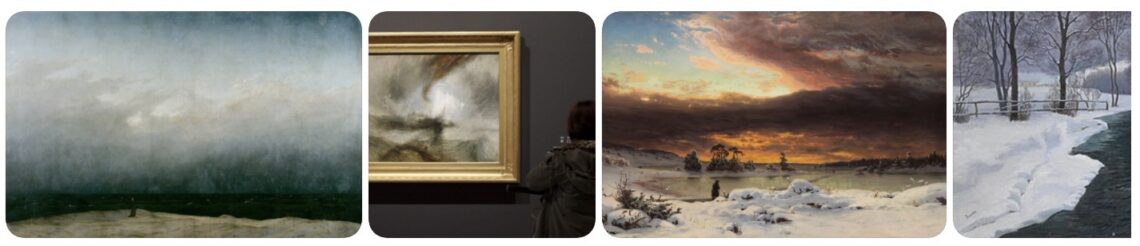
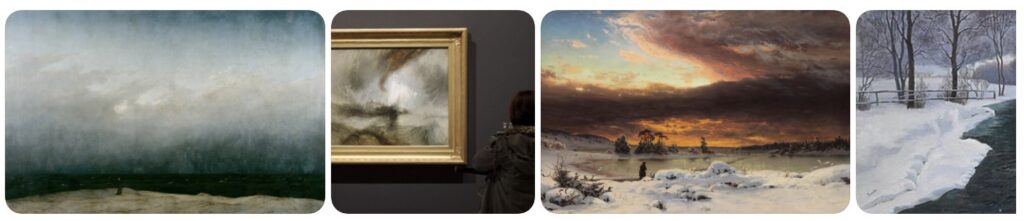
Few artists captured this better than Caspar David Friedrich. His winter landscapes are vast and spare, often featuring a solitary figure facing the horizon. The emotional charge lies not in action, but in contemplation.
Similarly, J. M. W. Turner rendered storms and snow with a near-abstract ferocity, dissolving form into atmosphere.
February’s skies—low, silver, and restless—mirror this aesthetic. Bare trees, long shadows, and muted fields are not decorative. They are sublime.
2. Romanticism Honors Solitude — and February Demands It
Winter strips away distraction. Social calendars thin. Evenings lengthen.
Romanticism does not fear solitude; it reveres it. The solitary thinker, the walker in nature, the dreamer by the window—these figures dominate Romantic imagery and literature.
February is the month of inwardness. It invites reflection before renewal. It is less about performance and more about interiority.
This is precisely why Romanticism resonates so deeply in late winter: it legitimizes emotional depth.
3. The Literature of Longing Lives in February

Romantic literature is saturated with longing—romantic, spiritual, existential.
In Wuthering Heights, the windswept moors are inseparable from the emotional turbulence of its characters. In Jane Eyre, moments of isolation precede profound transformation.
The poetry of Lord Byron and Percy Bysshe Shelley channels intensity—love, rebellion, grief, awe.
February is not a month of fulfillment; it is a month of anticipation. Romantic literature thrives in that space between desire and realization.
4. The Romantic Palette Is February’s Natural Language
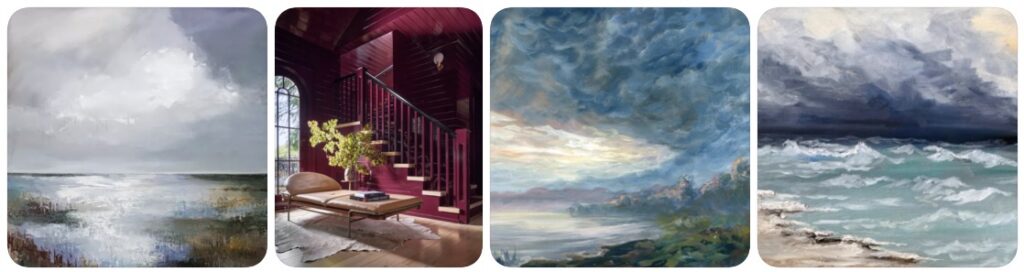
Romanticism favored deep tonal contrasts and atmospheric color:
• Smoke blue
• Charcoal
• Oxidized green
• Deep burgundy
• Storm gray
These are not spring colors. They are February colors.
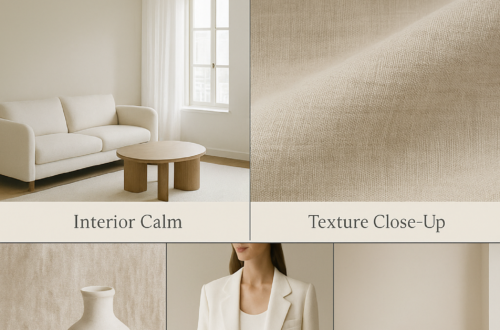
In interior design, this translates beautifully into layered neutrals, textured fabrics, velvet accents, aged wood, and diffused lighting. A Romantic interior in February feels cocooning yet dramatic—never sterile, never overly bright.
It embraces chiaroscuro: the interplay of shadow and illumination.
5. Romanticism Elevates Emotion Over Efficiency
The modern world values productivity and clarity. Romanticism resisted that. It elevated feeling over rationality and imagination over industrial order.
In February, when the year’s ambitions may already feel strained, Romanticism offers permission to slow down. To feel rather than optimize. To observe rather than perform.
The movement arose partly in reaction to the Industrial Revolution’s mechanization. It insisted that human experience is not merely functional—it is poetic.
Late winter, with its stillness, supports that philosophy.
6. Nature in February Is Honest — and So Were the Romantics

Romantic artists did not idealize nature as decorative. They depicted it as powerful, moody, sometimes bleak.
February landscapes are stripped of foliage. Structure is visible. Trees become line drawings against pale skies.
This bareness aligns with Romantic authenticity. Nothing is concealed. Emotional truths stand exposed.
There is beauty in that severity.
7. February Is a Threshold — and Romanticism Loved Thresholds
Romanticism is obsessed with liminality:
• Twilight
• Ruins
• Storms
• Edges of cliffs
• Doorways between light and dark
February is the seasonal equivalent of a threshold. It is neither deep winter nor true spring. It exists between dormancy and bloom.
That tension is inherently Romantic.
The month holds a quiet promise without yet revealing fulfillment. It asks us to stand at the edge and feel the weight of change before it arrives.
Why This Matters Now
Romanticism is not an antiquated movement confined to the 1800s. Its themes—emotional depth, reverence for nature, resistance to cold rationalism—feel increasingly relevant.
In art, we see renewed interest in atmosphere and narrative landscape.
In design, moody palettes and textural layering dominate.
In literature, interiority and moral tension remain powerful drivers of story.
February, in its restraint and quiet intensity, embodies the Romantic ethos more authentically than any other month.
It is not merely about Valentine sentiment. It is about standing before vast skies, feeling small and awake, and recognizing the sublime in stillness.
Thank you for reading…
For my short stories, click here.
For more art and design content, click here.
To support my writing, click here.