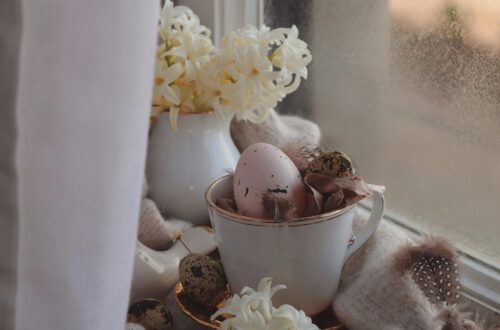
January is the quiet inhale after December’s long exhale. The ornaments are packed away, the lights dimmed, and what remains is the home itself—its bones, its textures, its ability to hold us through the coldest weeks of the year. This is not a month for dramatic reinvention. January interiors are about refinement, warmth, and intention. About learning how to live well inside the pause.
Rather than rushing to replace what the holidays have taken away, winter asks us to layer like the snow outside the window —to soften rooms, deepen comfort, and let light move gently through our spaces.
Designing for the Afterglow, Not the Aftermath
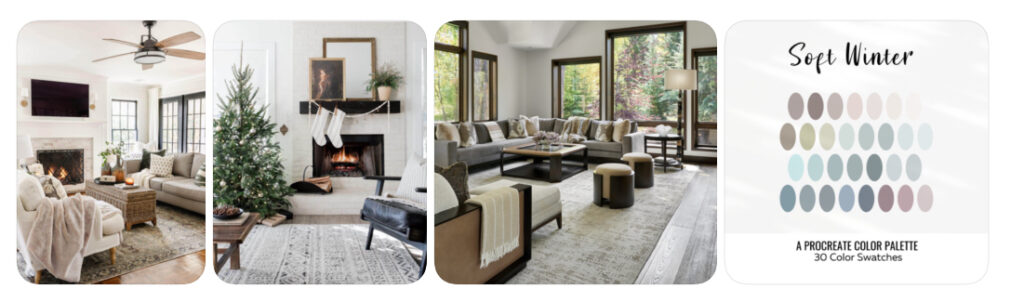
The mistake many people make in January is treating it as a decorative void. Once the festive pieces are gone, rooms can feel bare, unfinished, almost apologetic. But January interiors aren’t empty—they’re honest. They reveal what matters.
This is the month to let neutral palettes breathe: warm whites, oat tones, soft taupes, pale stone, and gentle charcoal. These hues don’t compete with winter light; they work with it. Shadows become part of the design. Corners feel intentional rather than forgotten.
Think of January as the season of edited beauty. Fewer objects, but each chosen with care. Nothing loud. Nothing rushed.
The Art of Textile Layering
If January has a design language, it’s texture.
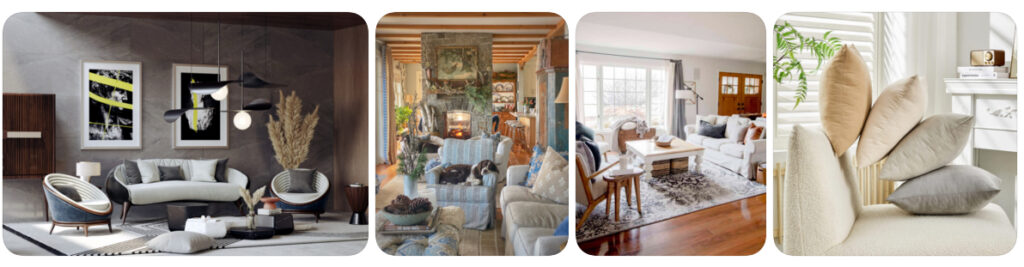
Layering textiles is the simplest way to restore warmth after the holidays without introducing clutter. Start with foundational fabrics—linen, cotton, and wool—and build gradually.
A sofa becomes winter-ready with:
• A wool or alpaca throw draped casually, not folded
• Linen or boucle cushions in varied tones of the same color family
• A heavier rug layered over a flat weave to ground the room
Bedrooms benefit from weight as well. Winter bedding should feel generous—layered quilts, soft coverlets, perhaps a mohair throw at the foot of the bed. Texture replaces ornamentation. The eye reads comfort before it registers color.
The goal is not abundance, but depth.
Lighting: Replacing Sparkle with Glow

December lighting sparkles. January lighting settles.
This is the time to turn away from overhead fixtures and let the room glow from lower points. Table lamps, wall sconces, and candles create pools of warmth that invite stillness rather than activity.
Amber-toned bulbs soften edges. Lamps placed near seating areas encourage reading, journaling, and conversation. Candlelight—especially in stoneware or opaque glass—adds movement without noise.
Good January lighting doesn’t illuminate everything. It allows for shadow. It lets a room feel held rather than exposed.
Materials That Carry Warmth
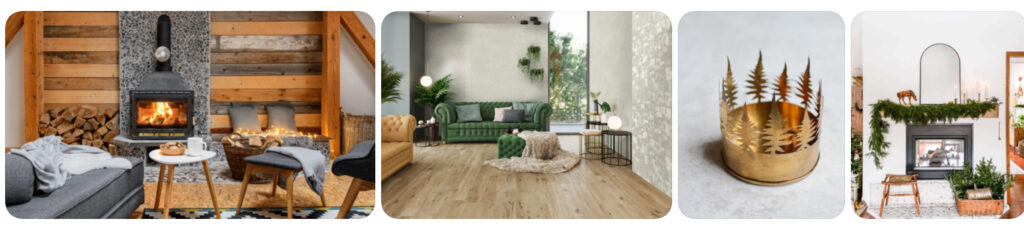
Winter interiors thrive on honest materials. This is the season when glossy finishes feel out of place and tactile surfaces take over.
Wood—especially oak, walnut, or reclaimed finishes—adds visual warmth even in cooler rooms. Stone and ceramic ground a space, offering quiet weight. Aged brass and matte metals catch light without reflecting it harshly.
These materials age well, both visually and emotionally. They remind us that winter is not sterile—it is elemental.
In January, design moves closer to the earth.
Creating Spaces for Rest and Creativity
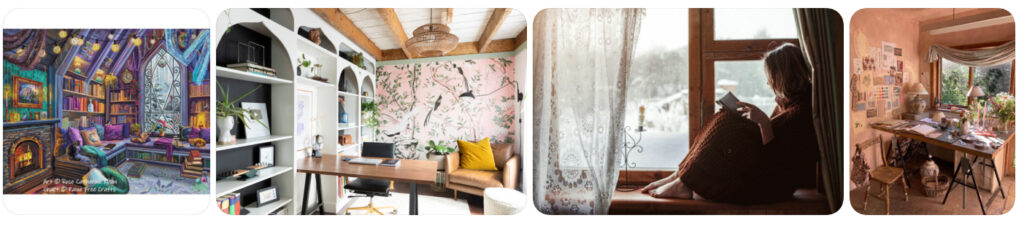
January interiors should support how we actually live during winter: slower mornings, longer evenings, inward focus.
This is the perfect time to refine reading nooks, writing desks, and quiet corners. A chair by the window layered with a throw. A small table holding a lamp and a book. A workspace cleared of excess but rich in texture.
These are not decorative moments—they are functional sanctuaries. Spaces designed for thinking, creating, and simply being.
Winter doesn’t ask us to perform. It asks us to listen.
⸻
A Home That Holds the Season
January is not an in-between month. It is a season in its own right—one that rewards patience, subtlety, and care. Interiors that embrace winter don’t fight its quiet; they honor it.
By layering texture, softening light, and choosing materials with depth, we allow our homes to become places of restoration rather than resistance. Not something to escape from, but something to return to.
In the stillness of January, good design doesn’t shout.
It warms.
It steadies.
It stays.