Introduction: The Season of Becoming
There is a quiet transformation that arrives each year—soft at first, then undeniable. Spring does not burst onto the scene; it unfolds. Bud by bud, light by light, it reshapes the world. For centuries, artists have tried to capture this fleeting moment of renewal—the tension between what was and what is about to be.
In art, spring is not merely a season. It is a language of rebirth, hope, fragility, and awakening. From mythological allegories to Impressionist gardens, the visual and emotional vocabulary of spring has remained one of the most enduring themes in artistic expression.
Spring as Symbol: Rebirth, Youth, and Myth
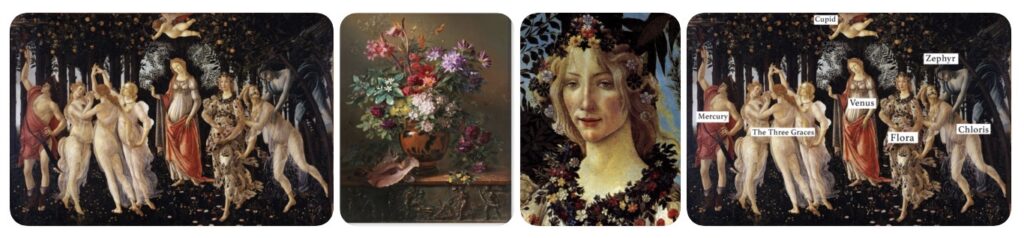
Long before the modern era, spring was deeply rooted in symbolism. In Renaissance art, it often appeared as an allegory—a coded visual story rich with meaning.
Perhaps the most iconic representation is Primavera by Sandro Botticelli. In this lush and enigmatic composition, spring is embodied through mythological figures: Venus presides over a garden of blooming orange trees, while Flora scatters flowers across the earth. Every detail—from the species of flowers to the gestures of the figures—communicates fertility, renewal, and the cyclical nature of life.
Spring in these works is not passive. It is active, almost divine. It represents transformation—winter giving way to life, darkness yielding to light. Artists of this period leaned heavily into classical mythology, using gods and allegorical figures to express the emotional and philosophical weight of the season.
Nature Observed: The Rise of Landscape Painting
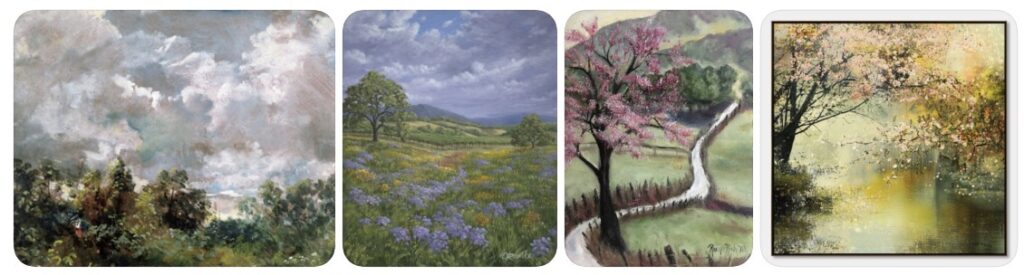
By the 18th and 19th centuries, artists began to shift from symbolic representations to direct observation. The Romantic movement emphasized emotion, nature, and the sublime—making spring a perfect subject.
Artists like John Constable captured the English countryside in vivid, living detail. His paintings are filled with rolling clouds, damp earth, and newly green fields. There is a palpable sense of atmosphere—spring not just seen, but felt.
In these works, renewal becomes grounded in reality. The viewer is no longer interpreting mythological allegory but standing in a field, watching the season change in real time. The emphasis on light, movement, and natural cycles reflects a broader cultural shift toward valuing nature as both subject and sanctuary.
Light and Color: The Impressionist Revolution
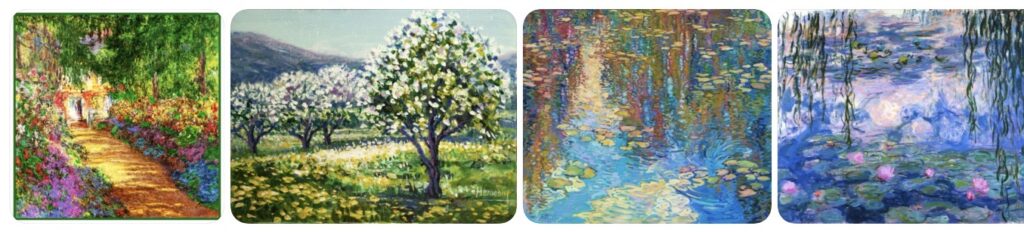
If spring belongs to any artistic movement, it is undoubtedly Impressionism.
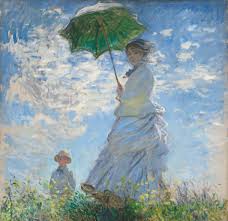
Painters like Claude Monet became obsessed with capturing fleeting moments—the way light shifts across a garden, the shimmer of water, the softness of blossoms in early bloom. Spring, with its constant change and delicate color palette, offered the perfect subject.
Monet’s gardens at Giverny are perhaps the most famous celebration of spring in art history. His canvases dissolve form into color and light, emphasizing sensation over precision. Pale pinks, soft greens, lilacs, and luminous blues dominate these works, reflecting the ephemeral beauty of the season.
The Impressionists transformed spring from a symbolic or narrative theme into an experiential one. Their paintings are less about what spring means and more about how it feels.
Modern Interpretations: Abstraction and Emotion
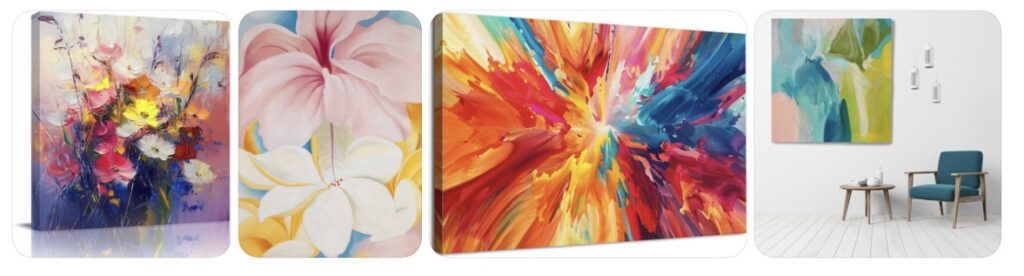
As art moved into the modern era, the representation of spring became increasingly personal and abstract.
Artists like Georgia O’Keeffe magnified flowers to monumental scale, turning them into immersive, almost sensual landscapes. Her work captures not just the appearance of spring, but its intimacy—its quiet intensity.
Contemporary artists continue to reinterpret spring through bold color, abstraction, and mixed media. Renewal is no longer confined to literal depictions of flowers or landscapes. It becomes an emotional state, a conceptual framework, a personal rebirth expressed through form and color.
Spring Beyond the Canvas: Influence on Design and Interiors
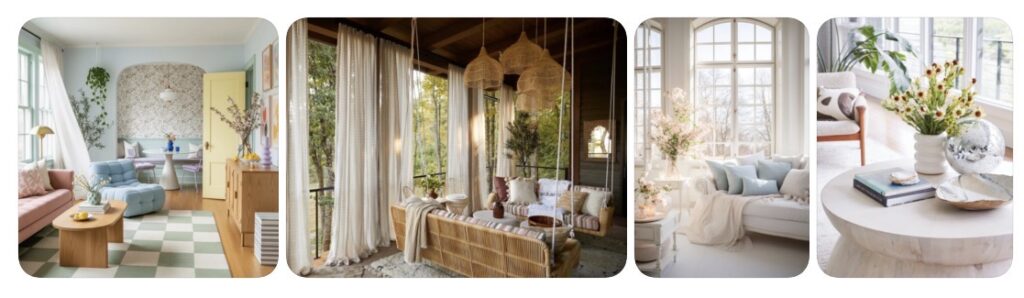
The artistic language of spring extends far beyond traditional art forms—it deeply influences interior design, architecture, and lifestyle aesthetics.
In interiors, spring is expressed through:
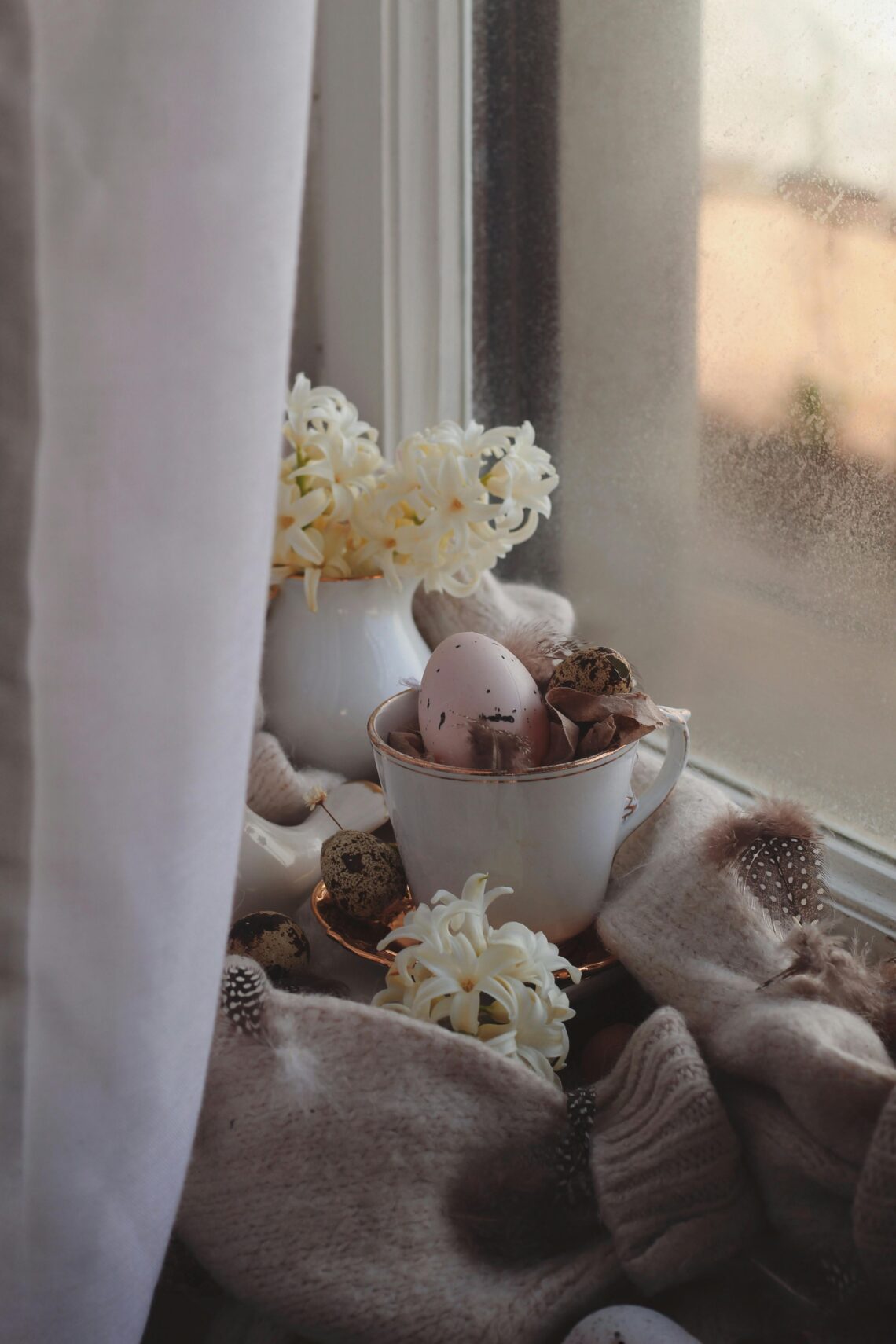
• Lightened color palettes: soft whites, pale greens, blush tones
• Natural materials: linen, rattan, unfinished wood
• Botanical elements: fresh flowers, branches, indoor plants
• Air and openness: decluttered spaces that invite light
This seasonal shift mirrors the same principles seen in art history: a move toward light, softness, and renewal. Just as the Impressionists opened their canvases to air and atmosphere, designers open spaces to breath and movement.
Final Thoughts: Why Spring Endures in Art
Spring persists as one of the most compelling subjects in art because it is universally understood—and endlessly variable. It is both external and internal, visible in the blooming world and felt in moments of personal transformation.
From the allegorical gardens of Sandro Botticelli to the luminous reflections of Claude Monet, artists have returned to spring again and again, each time finding something new within its familiar rhythm.
It reminds us that change can be gentle. That beauty often arrives quietly. And that even after the longest winters, something within us—and around us—will begin again.
Thanks for reading.
For more articles, click here.