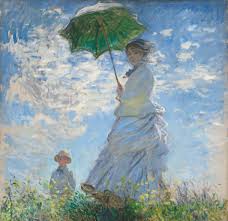
As the days lengthen and the days grow warmer, I want to bring some summer inspiration to my readers with a series of blog posts focusing on the summer season of warm nights and the summer sun’s bright, penetrating light. And, of course, what would summer be without the quintessential appeal of the Mediterranean ambiance.
There is perhaps no artistic movement more intrinsically tied to summer than Impressionism. It is a movement defined not by rigid form or historical grandeur, but by light in motion, fleeting beauty, and the quiet luxury of leisure. In a season where days stretch longer and the sun reshapes every surface it touches, Impressionism feels not just relevant—but essential.
For those of us working in art and design, the Impressionists offer more than inspiration; they provide a framework for seeing. A way to interpret space, color, and atmosphere that translates seamlessly from canvas to interior.




The Birth of a Summer Aesthetic
In the late 19th century, artists like Claude Monet and Pierre-Auguste Renoirturned away from dark studios and historical subjects, choosing instead to paint en plein air—outdoors, immersed in natural light.
Their focus was radical: not the object itself, but the effect of light upon it.
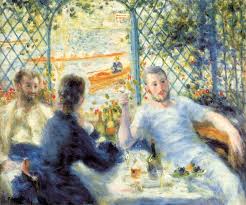
Monet’s haystacks, cathedrals, and gardens were painted repeatedly at different times of day, capturing subtle shifts in tone and shadow. Renoir, by contrast, leaned into human warmth—sunlit gatherings, laughter, and movement, often set against dappled foliage and shimmering water.
Together, they created a visual language that feels unmistakably like summer:
- Light that flickers rather than sits still
- Colors that blend instead of sharply contrast
- Scenes that feel lived-in, spontaneous, and alive

Light as the Primary Design Element
At the heart of Impressionism is a simple but transformative idea: light defines everything.
In design, this translates into a shift in hierarchy. Instead of treating light as an afterthought, it becomes the central feature around which all other elements are arranged.
Consider how Impressionist principles can guide interior spaces:
- Diffuse rather than block light with sheer drapery or open windows
- Use matte, tactile surfaces (plaster, limewash, unfinished wood) that absorb and scatter light softly
- Allow for movement in light—spaces that change throughout the day rather than remain static
The goal is not perfection, but atmosphere—a room that evolves with the sun.

The Impressionist Color Palette
Impressionist color is deceptively complex. At first glance, it appears soft and pastel-driven, but beneath that softness lies a sophisticated interplay of warm and cool tones.
Key characteristics include:
- Broken color: small strokes of varied hues that blend at a distance
- Unexpected pairings: lavender shadows, green highlights, blue reflections in skin
- Light-driven shifts: colors change depending on time of day
In interiors, this translates beautifully into:
- Layered textiles in slightly varied tones rather than exact matches
- Subtle contrasts (cool walls with warm wood, or vice versa)
- Avoiding stark black and white in favor of softened neutrals
The result is a space that feels alive rather than static.


Leisure as a Design Philosophy
Impressionism is not only about how things look—it is about how life is experienced within a space.
Renoir’s figures recline, converse, and drift through sunlit afternoons. There is no urgency, no rigidity. This sense of ease is something modern design often overlooks.
To bring this into your own spaces:
- Create areas that invite pause—reading nooks, window seating, shaded outdoor corners
- Embrace informality in arrangement; not everything needs to be perfectly aligned
- Layer comfort through textiles, cushions, and natural materials
Summer design, at its best, is not styled—it is inhabited.

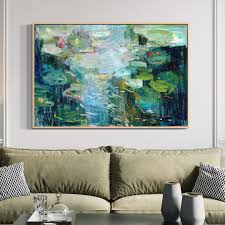
Translating Impressionism into Modern Interiors
What makes Impressionism enduring is its adaptability. It does not dictate a style—it offers a sensibility.
In contemporary interiors, this can take many forms:
- A minimalist room softened by shifting natural light
- A coastal space grounded in muted, painterly tones
- A layered, eclectic interior where color and texture echo brushstrokes
The key is restraint. Impressionism is not about replication, but interpretation—capturing the feeling of light, not the literal image.
Why Impressionism Still Resonates
In a world increasingly dominated by sharp lines, digital clarity, and constant stimulation, Impressionism offers something quieter: a return to observation.
It reminds us that beauty is often fleeting—a shadow across a wall, the way sunlight warms a surface, the subtle blending of colors at dusk.
For designers, artists, and writers alike, this is invaluable. It encourages us to create spaces—and stories—that are not just seen, but felt.
Thanks for reading. Stay tuned for the next post, Designing a Mediterranean-Inspired Summer Room: Texture, Light, and Simplicity