Aestheticism, Romantic Landscapes, and Dutch Winter Scenes
Winter has long stirred artists toward introspection, restraint, and emotional depth. Snow-covered fields, hushed interiors, and frost-bitten horizons offer a visual language uniquely suited to mood, symbolism, and beauty for beauty’s sake. For artists, designers, and art lovers alike—especially those drawn to atmosphere and storytelling—winter art movements provide enduring inspiration.
Below are three winter-aligned movements worth exploring this season, each offering its own visual philosophy and emotional temperature. Enjoy.
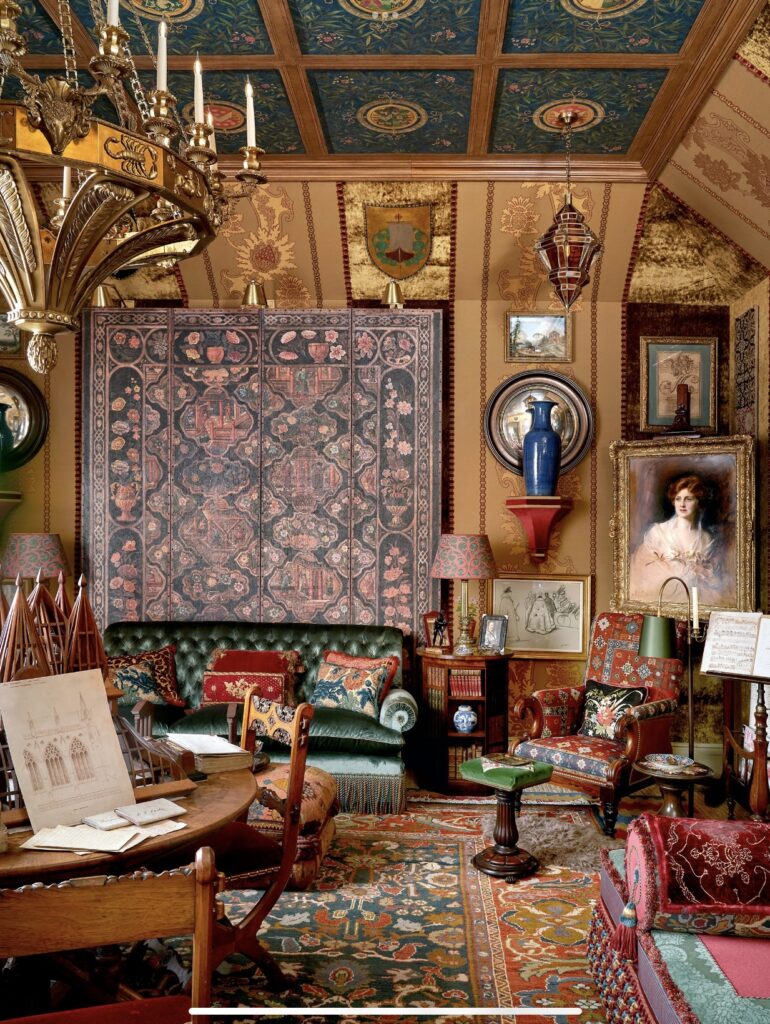
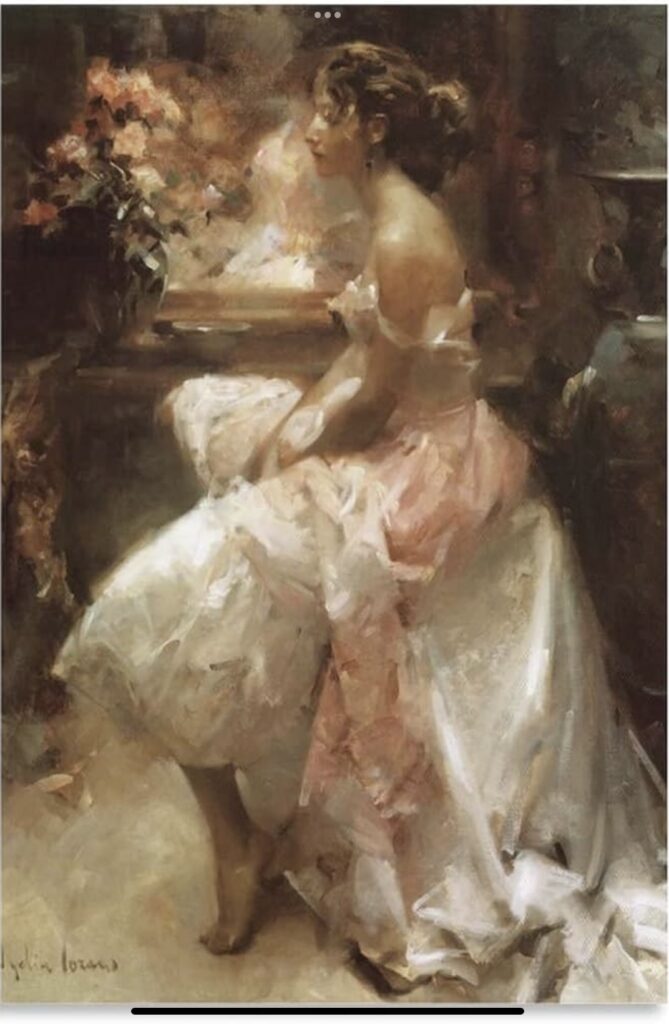
Aestheticism: Beauty in Stillness
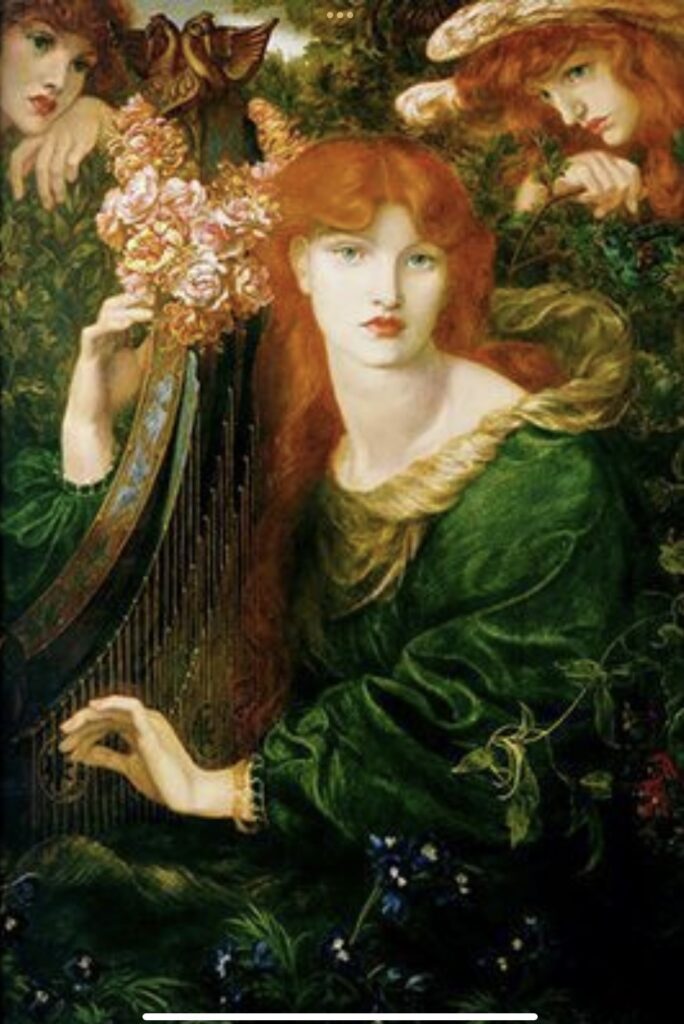
Emerging in the late 19th century, Aestheticism championed the idea of “art for art’s sake.” Rather than moral narratives or historical grandiosity, aesthetic artists focused on harmony, surface beauty, and refined atmosphere—qualities that resonate deeply with winter’s quiet restraint.
Winter aligns naturally with Aestheticism’s muted palettes and contemplative tone. Think silvery grays, pearl whites, smoky blues, and soft blacks—colors that echo snowfall at dusk or fog drifting through a city street.
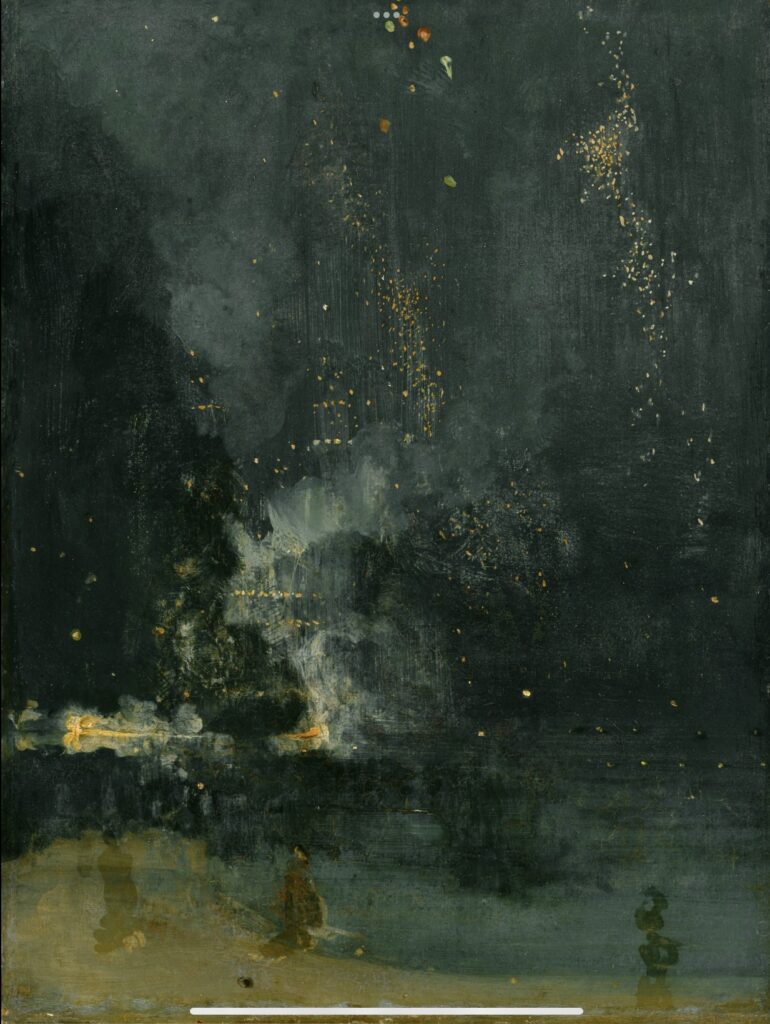
One of the movement’s central figures, James McNeill Whistler, exemplified winter’s poetic hush in his Nocturnes, where form dissolves into tonal harmony. These works feel less like depictions and more like whispered impressions—perfect companions to winter evenings.
Why explore Aestheticism in winter:
• Emphasis on tonal harmony over narrative
• Minimalism before modernism
• Ideal inspiration for interiors, textile design, and atmospheric illustration
For contemporary creatives, Aestheticism offers a reminder that winter doesn’t need drama to be powerful—stillness itself can be the subject.
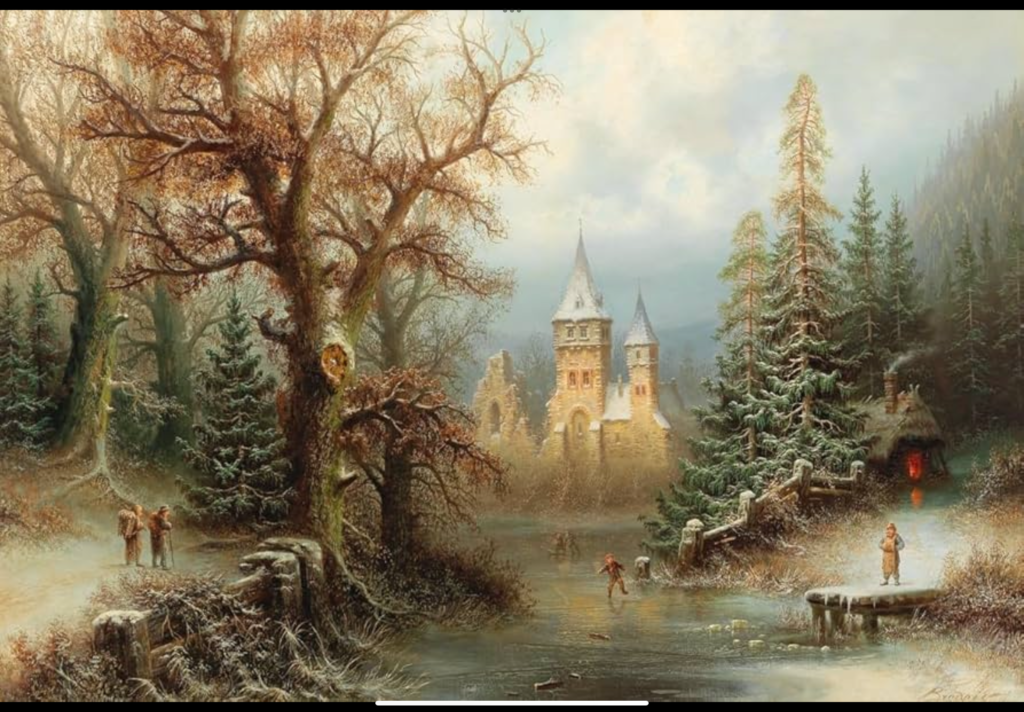
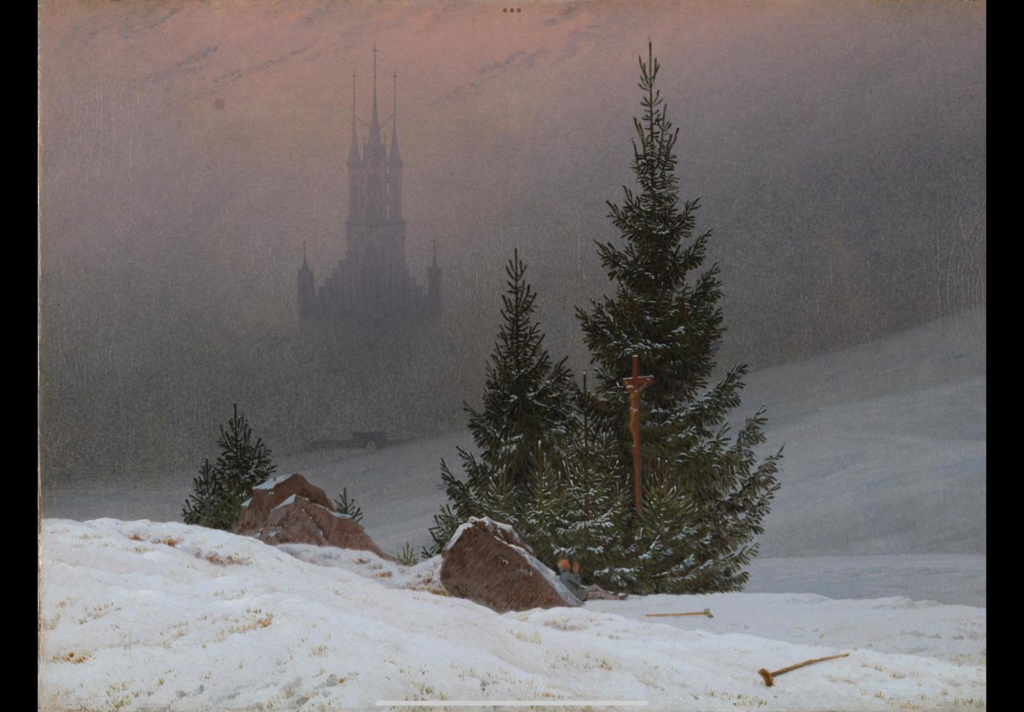

Romantic Landscapes: Winter as the Sublime
Where Aestheticism whispers, Romanticism speaks in awe. Romantic artists viewed nature as vast, emotional, and often overwhelming—a mirror for human longing and insignificance. Winter, with its frozen expanses and stark skies, became a natural stage for the sublime.
No artist embodies this more profoundly than Caspar David Friedrich. His winter landscapes place solitary figures against endless snowfields or looming mountains, evoking silence, faith, isolation, and spiritual reckoning. The snow is never merely decorative—it is emotional terrain.
Romantic winter landscapes are rich with symbolism:
• Bare trees suggest mortality
• Snow signifies purity, silence, or oblivion
• Distant horizons evoke yearning and the unknown
Why explore Romantic winter art:
• Deep emotional resonance and symbolism
• Ideal reference for narrative illustration and gothic storytelling
• Strong influence on fantasy, historical fiction, and cinematic composition
For writers and designers, Romantic winter scenes are visual poetry—perfect for conveying solitude, devotion, and inner conflict.
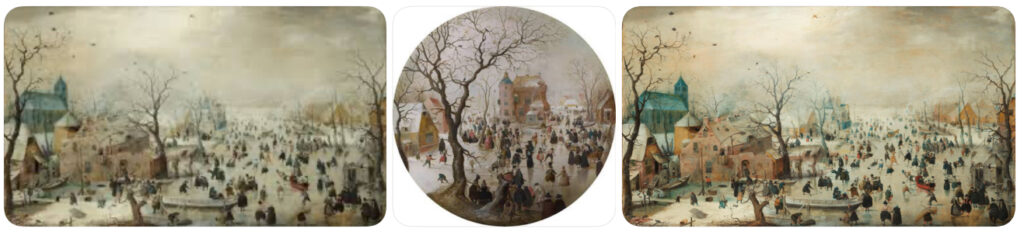
Dutch Winter Scenes: Life on Ice
In contrast to Romanticism’s grandeur, Dutch Golden Age winter scenescelebrate daily life under snow. Painted during the 17th century’s Little Ice Age, these works depict frozen canals filled with skaters, vendors, children, and quiet social rituals.
The master of this genre, Hendrick Avercamp, infused his winter scenes with charm, humor, and remarkable detail. Wrapped figures glide across ice, dogs chase children, and townsfolk gather—turning winter into a shared experience rather than a solitary one.
These paintings are rich visual documents, capturing:
• Historical clothing and architecture
• Community rituals during harsh winters
• The balance between hardship and joy
Why explore Dutch winter scenes:
• Narrative richness and observational detail
• Excellent reference for historical fiction and illustration
• Inspiring for pattern design, folk art, and storytelling compositions
Unlike the emotional isolation of Romanticism, Dutch winter scenes remind us that winter can also be lively, social, and quietly joyful.
Why Winter Art Endures
Across these movements, winter becomes more than a season—it is a lens through which artists explore beauty, emotion, and humanity itself. Whether through Aestheticism’s tonal serenity, Romanticism’s spiritual vastness, or Dutch realism’s communal warmth, winter offers a visual language that feels timeless.
For your own creative practice—whether writing, painting, designing interiors, or curating a seasonal mood board—these movements provide rich, enduring inspiration. Winter slows the world down. Art, in turn, asks us to look closer.
Thank you for reading…
For more, head to my main page, rkartandesign.com