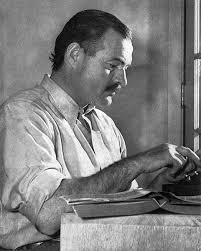
Few writers have left a mark on modern literature as deeply as Ernest Hemingway. With a prose style as lean as a sharpened blade and a life lived with near-mythic intensity, Hemingway reshaped the way stories are told. His fiction continues to influence novelists, journalists, and screenwriters more than half a century after his death.
My post for this gloomy winter week explores his life, defining experiences, signature literary style, and his most important works, offering readers a fuller understanding of how the man and the myth intertwined to produce some of the 20th century’s most enduring literature.
Let’s dive in…
Early Life: The Making of a Storyteller
Ernest Miller Hemingway was born on July 21, 1899, in Oak Park, Illinois, a comfortable suburb outside Chicago often described—ironically—as a place of “broad lawns and narrow minds.” His parents were opposites:
• Clarence Hemingway, a physician who loved fishing, hunting, and the outdoors
• Grace Hemingway, a strong-willed former opera singer who nurtured her children’s artistic talents
It’s no surprise that Hemingway inherited both sensibilities: a reverence for nature and a fierce dedication to craft.
As a teenager, Hemingway wrote for his high school newspaper, showing early flashes of the crisp, direct writing that would later define him. Upon graduating, he bypassed college for the newsroom, becoming a reporter for The Kansas City Star. The paper’s style guide emphasized short sentences, vigorous English, and clarity—principles Hemingway held for life.
War, Wounds, and the Birth of a Literary Voice
In 1918, during World War I, Hemingway volunteered as an ambulance driver for the Red Cross in Italy. Only weeks into his service, he was severely wounded by mortar fire while delivering chocolate and cigarettes to soldiers on the front line.
He survived, but the experience left deep physical and emotional scars.
This brush with mortality—and the complicated romance he formed with nurse Agnes von Kurowsky—became the seeds of his first great novel, A Farewell to Arms.
The war years also shaped what Hemingway later termed the “iceberg theory”: the idea that the deeper meaning of a story should lie beneath the surface, unspoken but powerfully felt, just as the mass of an iceberg sits invisible below the waterline.
Paris and the Lost Generation
After the war, Hemingway moved to Paris, then the beating heart of modern art and literature. In cafés and smoky apartments, he mingled with writers and artists such as
• F. Scott Fitzgerald
• Gertrude Stein
• Ezra Pound
• James Joyce
Stein famously called Hemingway and his peers “the Lost Generation”, referring to the disillusioned youth who came of age during World War I.
Paris sharpened Hemingway’s instincts for dialogue, structure, and emotional restraint. It also became the basis for his beloved memoir A Moveable Feast, published posthumously, in which he immortalized the bohemian vibrancy of 1920s Paris.
A Life of Adventure: Fuel for Fiction
Hemingway was not merely a writer; he was a man who believed in living first, writing second. His adventures often became the raw material for his books:
Spain and the Bullfights
Hemingway fell in love with Spain—its food, its people, its passion, and especially bullfighting. His nonfiction masterpiece Death in the Afternoon and his novel The Sun Also Rises reveal his fascination with courage, ritual, and the struggle between life and death.
African Safaris
His experiences on safari inspired several short stories and his memoir Green Hills of Africa. His near-fatal plane crashes in 1954 only added to the Hemingway legend.
Cuba and the Sea
Hemingway lived in Cuba for nearly two decades, soaking in the rhythms of island life. His love of deep-sea fishing directly influenced The Old Man and the Sea, the novella that earned him the Pulitzer Prize in 1953.
War Correspondence
He covered the Spanish Civil War and World War II as a journalist, once again placing himself in the proximity of conflict. His experiences shaped the novel For Whom the Bell Tolls, widely considered one of his finest works.
Major Literary Works and Why They Endure
The Sun Also Rises (1926)
A novel of disillusionment, desire, and post-war emptiness. Hemingway’s dialogue-driven scenes and minimalist narration broke new ground.
Themes: lost purpose, masculinity, unrequited love, the search for meaning.
A Farewell to Arms (1929)
A tragic love story set against the chaos of World War I.
Themes: the brutality of war, the randomness of fate, the human longing for hope in darkness. I am reading this at the moment and I will be doing a blog post about my opinion.
For Whom the Bell Tolls (1940)
Centered on an American fighting with anti-fascist forces in the Spanish Civil War, this novel showcases Hemingway’s most expansive storytelling.
Themes: sacrifice, idealism, war’s moral complexity.
The Old Man and the Sea (1952)
A simple tale about an aging fisherman battling a giant marlin—but beneath the surface lies an epic about dignity, perseverance, and the human spirit.
Awards: Pulitzer Prize; contributed to his Nobel Prize in Literature (1954).
Short Stories
Hemingway’s short stories are essential reading, often considered the purest form of his style.
Notable works include:
• “Hills Like White Elephants”
• “The Snows of Kilimanjaro”
• “Indian Camp”
• “A Clean, Well-Lighted Place”
These stories exemplify his mastery of subtext, understatement, and emotional precision.
Hemingway’s Writing Style: The Art of the Unsaid
Hemingway pioneered a new era of prose—lean, unembellished, and powerful. His trademark techniques include:
1. Minimalist Language
Stripped-down sentences free of excess adjectives or ornate descriptions.
2. The Iceberg Theory
The deeper message is implied, not stated; readers must feel the weight beneath the surface.
3. Rhythmic Repetition
Simple clauses layered for rhythm and emotional impact.
4. Dialogue as Action
Characters reveal themselves through what they say—and do not say.
5. Themes of Courage and Endurance
Even in despair, his protagonists exhibit what he called “grace under pressure.”
His influence is immense: modern fiction, journalism, screenwriting, and even advertising owe something to Hemingway’s precision and economy.
Late Life and Legacy
Despite literary fame, Hemingway struggled in later years with depression, injuries, alcoholism, and the mental toll of his adventurous life. He died by suicide in 1961, leaving behind an unfinished body of work and an enduring mystique.
Today, Hemingway remains:
• a titan of American literature
• a master craftsman of the short story
• a cultural icon whose life and art blur into one
His works continue to be studied for their innovation, emotional depth, and profound impact on the modern narrative form.
Why Hemingway Still Matters
In an age of overwhelming noise and information, Hemingway’s clarity feels timeless. His writing reminds us that:
• Truth can be simple
• Courage can be quiet
• Emotion can exist in the spaces between words
His characters confront the essential struggles of being human—love, loss, fear, faith, purpose—and in doing so, they speak as clearly today as they did nearly a century ago.